For Employers
For Government
For Individuals
What the midterm election results mean for student loan borrowers
November 9, 2026
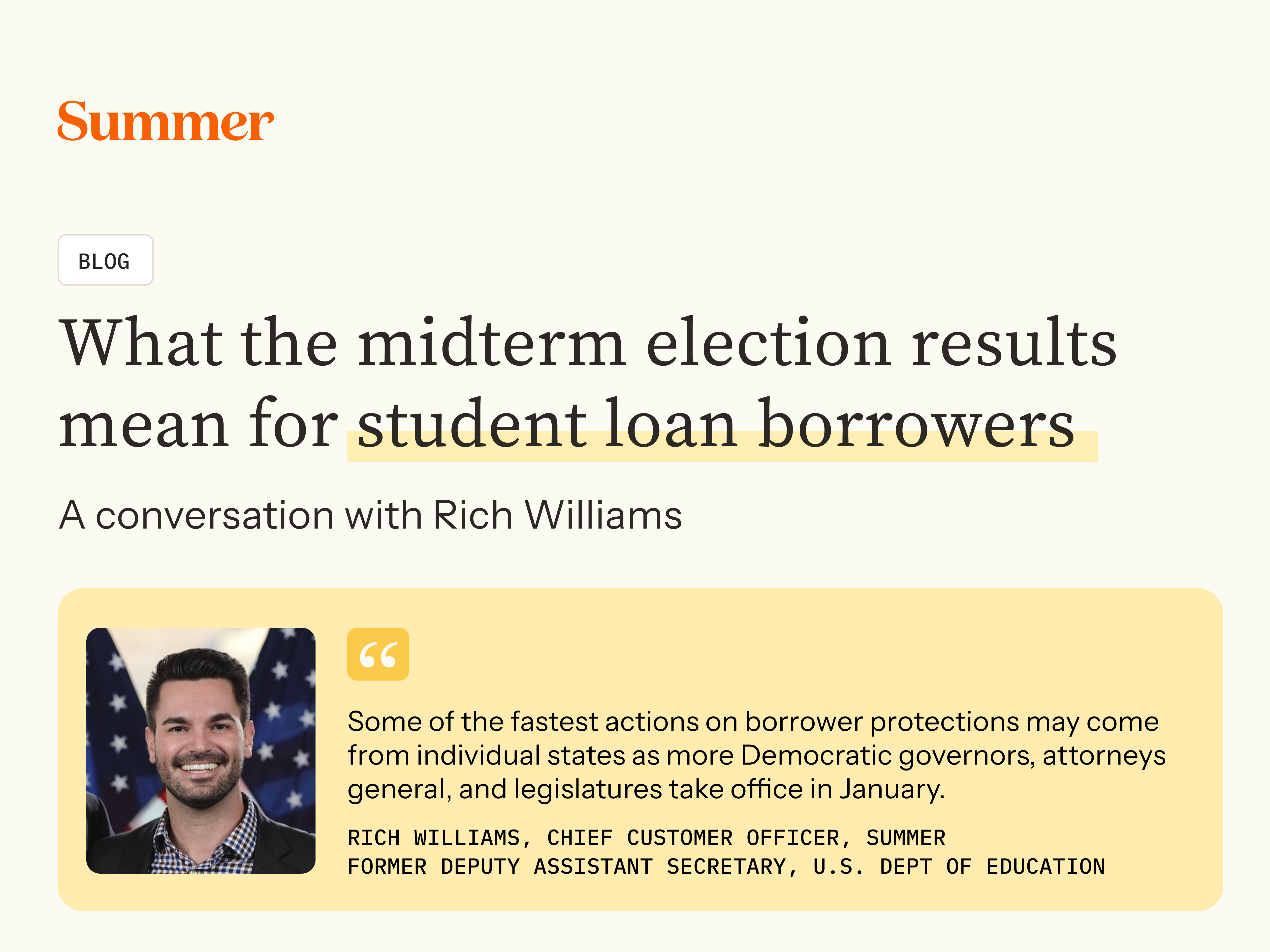
Democrats won control of both the House and the Senate on November 3rd and will start governing in early 2027. Below is an interview with Rich Williams, Summer’s Chief Customer Officer and a former Deputy Assistant Secretary at the U.S. Department of Education, on what the results mean for borrowers and the employers and municipalities that support them.
Affordability came up again and again this election. Where do student loans fit in?
For a lot of households, a student loan payment is one of the biggest monthly bills, alongside housing, healthcare, and child care. The past year added pressure. One of the most affordable income-driven repayment plans, the SAVE plan, ended, and millions of borrowers have received notices to switch to a new and likely more expensive repayment plan this fall. If they don’t take action, they will see their monthly payment double or triple compared to their past payments. These changes meaningfully affect a family's finances and influence their impression of national affordability.
Does anything change for borrowers right now?
Not immediately. The new Congress takes office in January, and even then, major changes to student loan law need the President’s signature. Democrats do not have the two-thirds majority it would take to override a veto without bipartisan support. Some Democrats have introduced bills to lower interest rates, but there hasn’t yet been a serious proposal to change repayment options, and broad cancellation doesn’t seem to be on the table. Borrowers’ payments, plans, and deadlines are the same today as they were last week.
So what changes in Washington?
Mostly the potential for oversight. The Democratic majority in Congress controls the committees and appropriations process, which gives it hearings, subpoenas, and leverage over how federal agencies and the companies they hire run the loan programs. I expect lawmakers to look closely at how federal agencies, like the U.S. Department of Education and Treasury, and federal loan servicers are implementing the One Big Beautiful Bill Act, how well Public Service Loan Forgiveness is working, and how shifting Department of Education functions to other agencies affects borrowers. Loan servicers and collection contractors should expect more scrutiny. We’ll learn more about the Democratic majority’s priorities with the first piece of legislation they introduce and pass.
If Washington is slow to act, are there other opportunities where action or relief may happen faster?
Some of the fastest actions on borrower protections may come from individual states as more Democratic governors, attorneys general, and legislatures take office in January. During the first Trump Administration, a wave of states passed laws to license student loan servicers and gave attorneys general and student loan ombudspersons new authority to investigate borrower complaints. We could be on the cusp of a new wave of state and municipal oversight and affordability initiatives.
What should borrowers do now?
It’s risky to plan for something that may not happen. Borrowers should treat the headlines with some skepticism, focus on the rules in front of them, and make decisions based on current policies and their current financial situation. A senator introducing legislation doesn’t change anyone’s loan. Even if a law passes, changes may take years to reach borrowers, or may apply only to new borrowers.
In the meantime, borrowers leaving SAVE must pick a new plan, and the choice matters most for anyone working toward forgiveness. They need to understand which plans they qualify for and what each choice means for their payment and long-term costs. Public Service Loan Forgiveness remains available and federal tax-free, while forgiveness through income-driven repayment plans became taxable at the federal level again this year. Borrowers should also watch for scams that use these headlines to pitch “new forgiveness programs.” Applying for a federal repayment plan or Public Service Loan Forgiveness costs nothing. Borrowers should never need to pay for student loan support.
What does this mean for employers?
Employers should expect more questions. As the headlines get louder, employees want a trusted place to get straight answers about their own loans. The case for that support holds no matter who controls Congress, because the rules are complicated, the deadlines are real, and employees need help now.
The Department of Education paused involuntary collections, including wage garnishment, and Treasury is preparing to take over collections on defaulted loans. Garnishment could return this winter. When it does, borrowers in default could lose up to 15% of their disposable pay.
Where they can, employers can encourage affected staff to review their options for leaving default, including loan rehabilitation and consolidation programs that can get them back into good standing. Summer helps employees in default understand their options for getting out of default and back into an affordable repayment plan.